

Racing to the Red Line of Perfection
Interview – March 7, 2026
J’s Racing manufactures Honda’s ultimate tuning parts for drivers who demand the very best—from the streets of Osaka to racetracks around the world.
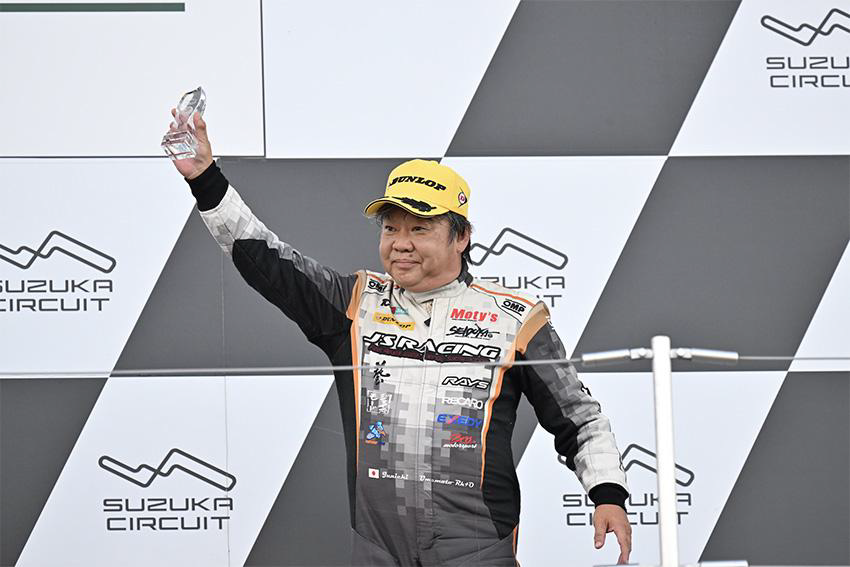
Junichi Umemoto, President of J’s Corporation
This growth is rooted in reliability. Japanese cars already had a well-established reputation for quality. Rather than going against that foundation, Japanese tuning respected it. Customers around the world felt that Japanese tuning parts were well-designed, thoroughly tested, and reliable.
The main difference lies in balance. Japanese tuning does not focus on chasing a single headline number; instead, it aims to elevate the car’s overall performance—including handling, responsiveness, and durability. Japanese car tuning differs from that of other countries because each region manufactures vehicles based on its specific environment. American tuning emphasizes power. European tuning emphasizes suspension and stability. Japanese tuning emphasizes overall balance.
This is because Japanese cars themselves are designed to function well under the many conditions of a small country.
Compared to other countries, what do you think are the strengths of Japan’s automotive culture?
First, I want to make it clear that tuning and modification are not unique to Japan. Wherever there are automakers, there are tuners. In Germany alone, there have long been companies like AMG and Lorinser, and there are many others, such as BMW M and Alpina. In the United States, the same structure can be seen around Ford, Dodge, and other manufacturers, ranging from private tuners to factory-backed performance divisions. Therefore, it is not accurate to say that Japan is special simply because it has a large number of tuners. Countries with many manufacturers naturally have many tuners as well. The difference lies not in numbers, but in culture.
In Japan, tuning fits Japanese cars very well and is deeply intertwined with the country’s manufacturing culture. Japanese cars have been accepted worldwide for their quality, reliability, and excellent balance. Japanese tuning was built upon that foundation. The meticulous craftsmanship, attention to detail, and commitment to consistency that define Japanese manufacturing are already trusted worldwide, and tuning carries that trust forward. Car culture also reflects the local environment. In the United States, there is a culture that emphasizes muscle and power. In Europe, tuning often centers on suspension and body control, which are essential given the road conditions. Japan is a small island nation with limited space and diverse driving conditions. Japanese manufacturers have learned to pack a wealth of features into a single car, and Japanese tuners do the same. Suspension, powertrain, and chassis are developed together with the overall balance in mind. That overall balance is the hallmark of Japanese tuning.
Let me answer your question more directly.
Japan didn’t stand out because it has more tuners than other countries. The difference lies in how Japanese people tune Japanese cars and the reasons why that approach has earned global trust. Japanese tuning embodies the values of Japanese manufacturing: balance, reliability, and refinement. Rather than focusing on a single extreme, Japanese tuners improve the car as a whole system. It is precisely this consistency and overall balance that have led to the worldwide recognition and respect for Japanese tuning culture.
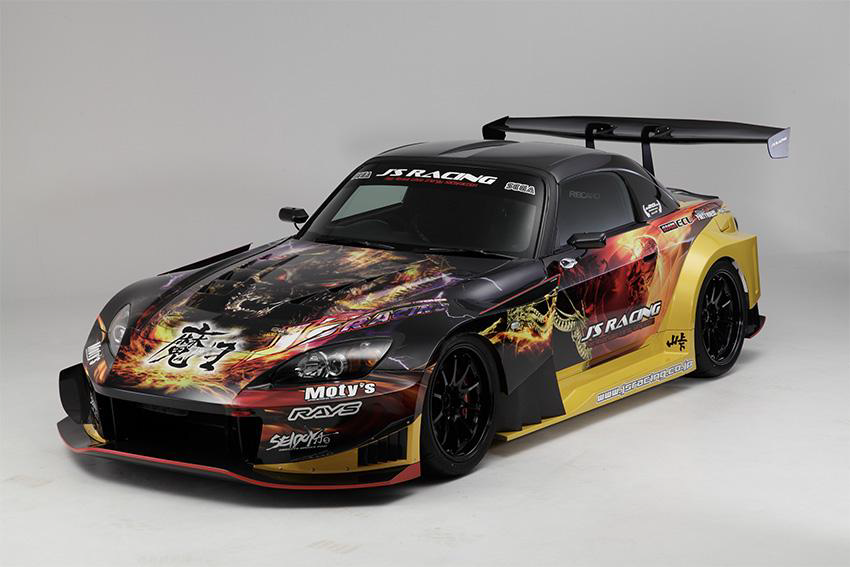
As electrification simplifies automobiles by reducing their main components to motors, inverters, and batteries, how do you, as an aftermarket motorsports company, view this challenge from an automotive manufacturing perspective? Are business opportunities limited?
Electrification is changing the structure of automobiles, and at first glance, they may appear simpler than conventional internal combustion engine vehicles. However, I do not believe this means that tuning and engineering have lost their importance. A car has always consisted of three key elements: the chassis, the suspension, and the powertrain. Even if the powertrain shifts from an engine to a motor, the other two elements remain absolutely essential. You cannot build a good car by ignoring the suspension and chassis.
What matters even more is quality. Japanese manufacturers devote tremendous effort to quality assurance. Even something as simple as a door is opened and closed tens of thousands of times before mass production to ensure reliability. It is precisely this discipline that fosters a sense of trust and ergonomics. Electrification should not mean abandoning that mindset. If we pursue electrification by prioritizing speed and cost alone without conducting the same level of testing and refinement, we will lose what is truly important. For us, electrification is not the end of opportunities, but it requires more careful testing, data accumulation, and engineering effort.
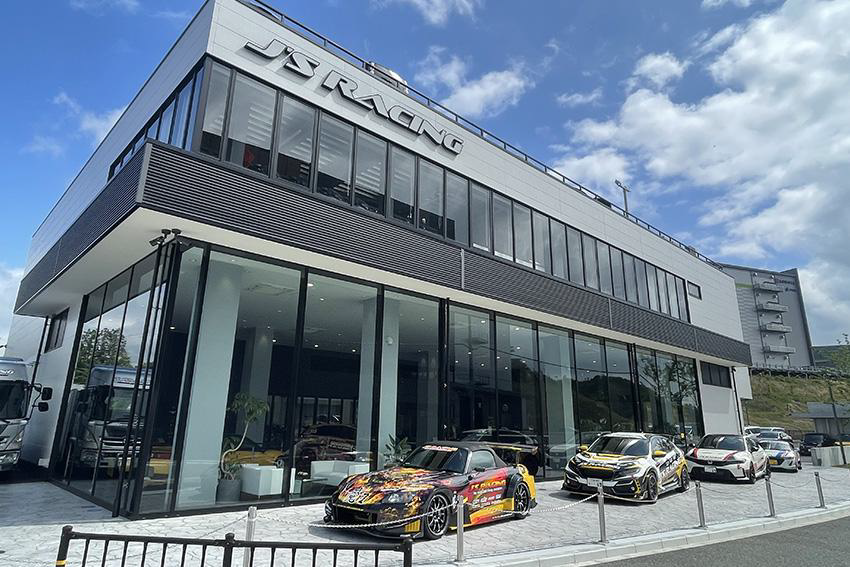
Although there are many components that can be modified, I feel that electrification is generally perceived as difficult to customize. Could automation and electrification themselves present a business opportunity?
I completely understand how you feel. Electric vehicles don’t convey performance in the same way as conventional engines. They produce less noise, offer less mechanical feedback, and have fewer visible elements. However, the changes aren’t just about appearance. What matters is performance, control, efficiency, and the driver experience. With electric vehicles, the focus shifts to thermal management, software control, brakes, suspension setup, and overall system integration.
This can absolutely be a business opportunity. All it requires is a different approach. The need for testing remains the same. We develop components through trial and error on actual circuits, accumulating data over hours and days. That philosophy still applies today, whether the power source is an engine or a motor.
Given the global shift toward electrification, what role will hybrid vehicles play in the future? Do you personally drive a Japanese hybrid vehicle? Even though hybrid vehicles already deliver strong performance and fuel efficiency in the real world, do you think consumers really need fully electric vehicles?
Hybrid technology is extremely important. Cars like the Harrier Hybrid demonstrate just how effective hybrids can be. They offer excellent fuel economy and convenience without the range limitations of fully electric vehicles. For many people, a hybrid is more than enough. Electric vehicles aren’t bad, but they aren’t the best solution for everyone. Technology needs to align with real-world usage. Ford’s sales increased by 21%, and hybrid vehicles were a contributing factor. This shows how the market is responding to actual needs. Hybrids improve efficiency without completely changing people’s lifestyles. For us, this means we must continue to learn and adapt.
J’s Racing recently made a major move by acquiring Central Circuit in Hyogo Prefecture.
This is extremely rare in Japan. Personally, what prompted you to make that decision? Also,
as part of your motorsports activities and long-term business vision, how do you
plan to utilize this circuit?
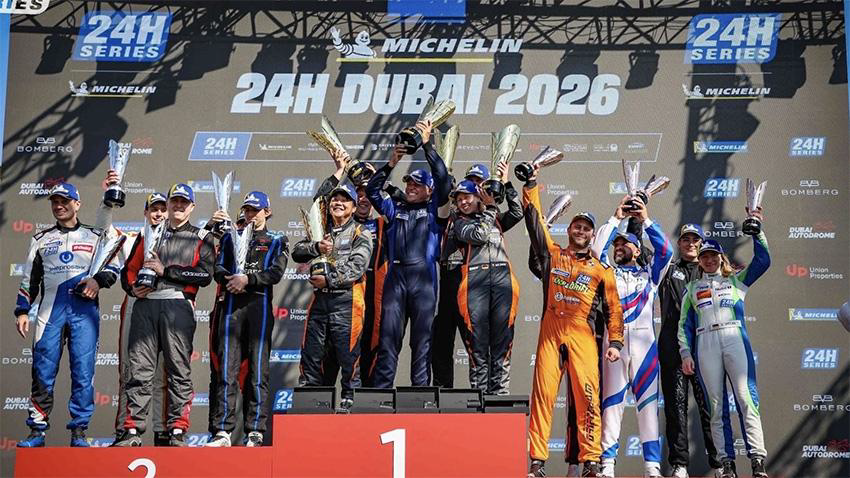
I’ve been racing for over 30 years. Racing is my life’s work. I started in the mountains and eventually moved to the circuit. Currently, I race internationally, including in 24-hour endurance races. There are few circuits in Japan, and it’s extremely rare to purchase one. When the opportunity arose to acquire Central Circuit in Hyogo, I felt incredibly lucky. It was a perfect fit for my life and work.
Our primary objective is development. Testing, durability evaluation, and data collection are essential for us. Owning the circuit allows us to conduct continuous testing and refine our products with precision. It also creates opportunities for education and future programs. Furthermore, if managed properly, it can generate business opportunities such as tourism and driver experience programs. However, the circuit alone is not enough. We need planning, safety measures, and infrastructure. However, many JDM fans visit Japan, and having a circuit allows them to experience Japanese culture firsthand. As soon as the upgrades are complete, we’ll be ready to welcome people from all over the world.
Finally, could you share a few highlights from your recent product development efforts? In particular, are there any new parts that reflect J’s Racing’s current priorities in performance engineering?
Yes. We have released a dry-carbon hood, a GT wing, and a titanium exhaust system. Each of these components was developed with practical performance benefits in mind, such as improved cooling, weight reduction, and aerodynamic efficiency.
What do you hope to accomplish before you retire, or before passing the baton to the next generation of leaders at J’s Racing?
Of course, the IPO is an imminent milestone that we will achieve. While this wasn’t my original goal, “Fun to Drive” is the fundamental principle underpinning all of my business models. It is thanks to this philosophy that we are on the path we are on today. From car modifications and track days to car dealerships and rentals, everything related to the automotive business forms part of the ecosystem we are building based on this philosophy. We will continue to pursue this vision and deliver the excitement and joy I feel when using these products to our customers. I hope that those who enjoy this will share my dream and continue with us.
We are currently building a solid foundation, and an IPO will help us reach even more people.
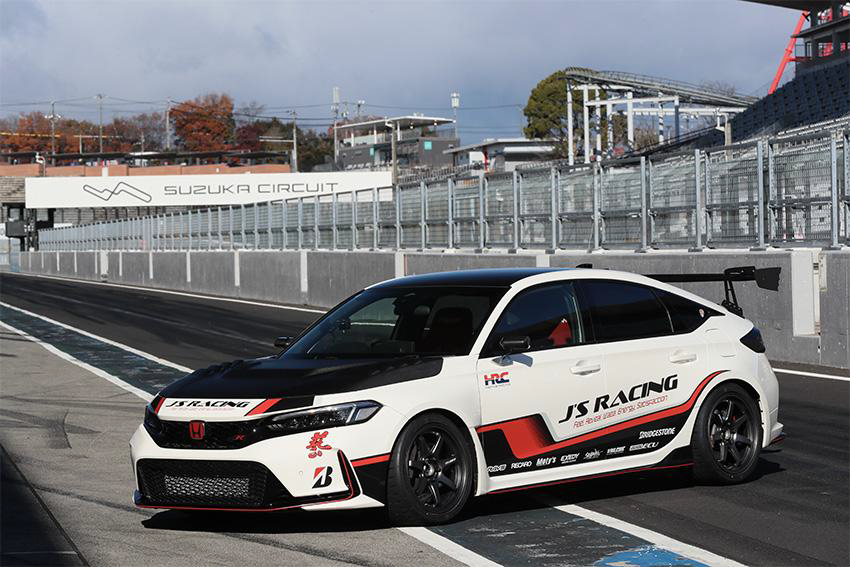
Our current scale is approximately 10 billion yen, and ideally, we aim to reach 300 billion yen within the next 6 to 7 years. Since we are committed to continuing to realize these dreams, this is entirely achievable. The Honda Civic Type R is being developed with a strong focus on testing at the Nürburgring, and we are currently conducting evaluation tests.